Description
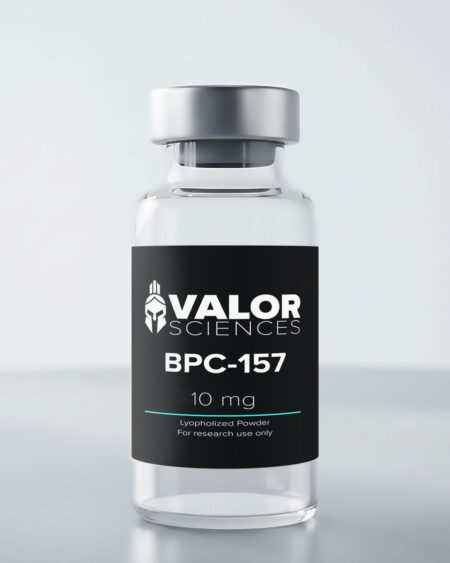
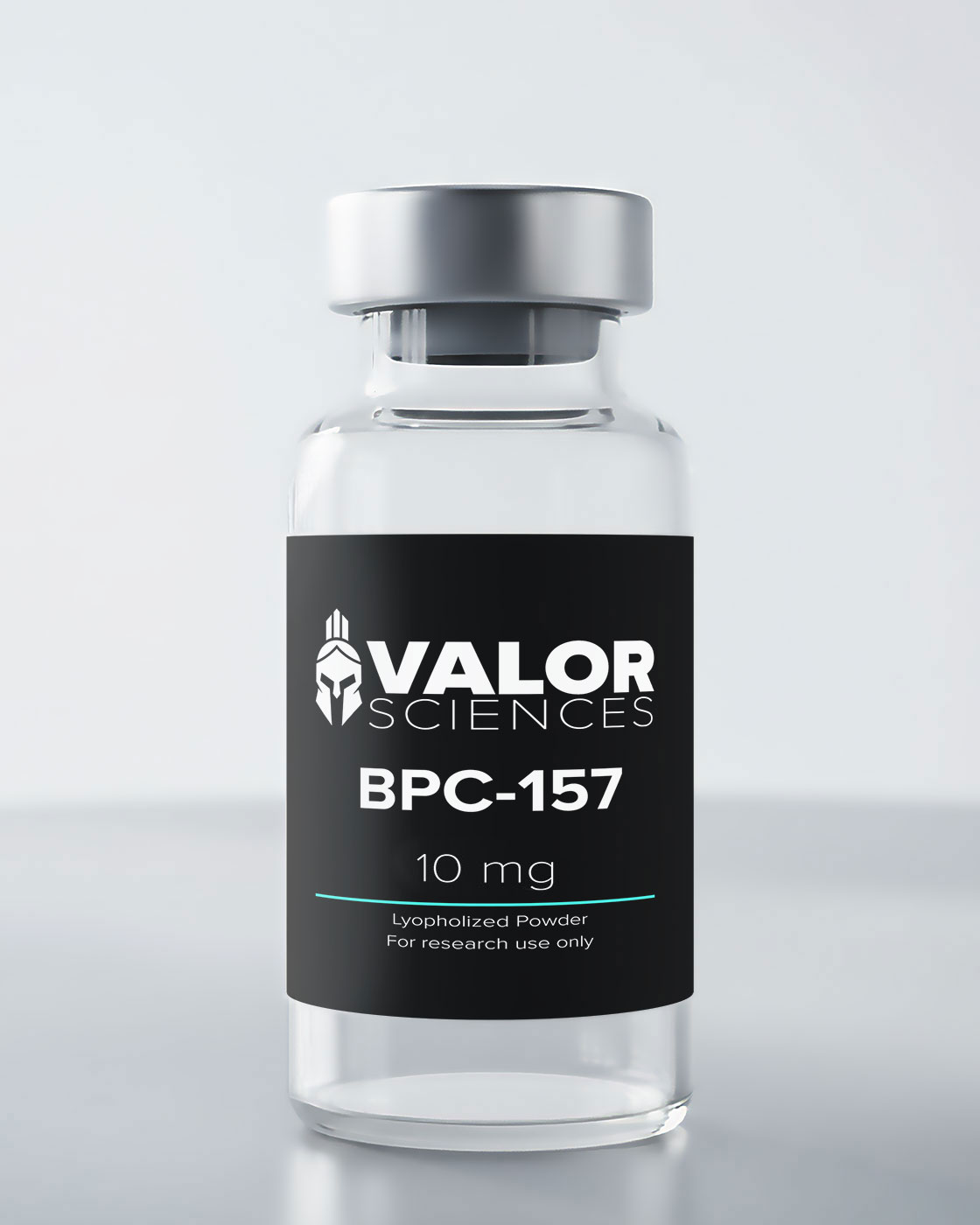
BPC-157 Research Peptide (10 mg)
BPC-157 is a synthetic pentadecapeptide. This 15–amino acid fragment has been extensively characterized in peer-reviewed in-vitro and animal model research spanning three decades.
Structural Characteristics
BPC-157 is a linear peptide lacking disulfide bonds. Its remarkable stability derives primarily from four proline residues at positions 3, 4, 5, and 8, including a distinctive triple-proline (PPP) motif.
This proline-rich sequence introduces conformational rigidity that strongly resists proteolytic degradation by trypsin, chymotrypsin, and catheptic proteases.
Characterized Signaling Pathways
Published research has identified multiple cellular signaling interactions:
Nitric Oxide Signaling (eNOS)
Research by Hsieh et al. (Scientific Reports, 2020) demonstrated that BPC-157 induces phosphorylation of eNOS at Ser1177 through the Src–Caveolin-1–eNOS signaling cascade, reducing inhibitory Cav-1–eNOS complex formation and enabling NO production.
VEGFR2 Pathway
Studies show BPC-157 upregulates VEGFR2 mRNA and protein expression in vascular endothelial cells, promoting receptor internalization and activating downstream VEGFR2–Akt–eNOS signaling (Hsieh et al., Journal of Molecular Medicine, 2017).
Growth Hormone Receptor
cDNA microarray analysis identified GHR as abundantly upregulated following BPC-157 treatment, with dose-dependent increases reaching up to 7-fold elevation in both mRNA and protein levels (Chang et al., Molecules, 2014).
FAK–Paxillin Cascade
Western blot analysis confirmed dose-dependent increases in phosphorylation of both FAK and paxillin, correlating with enhanced fibroblast migration and F-actin formation (Chang et al., Journal of Applied Physiology, 2011).