Description
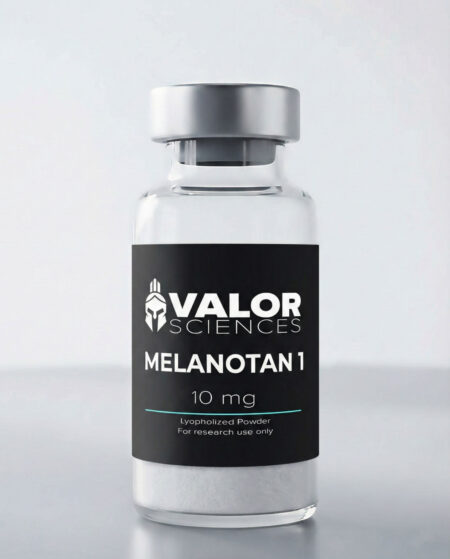
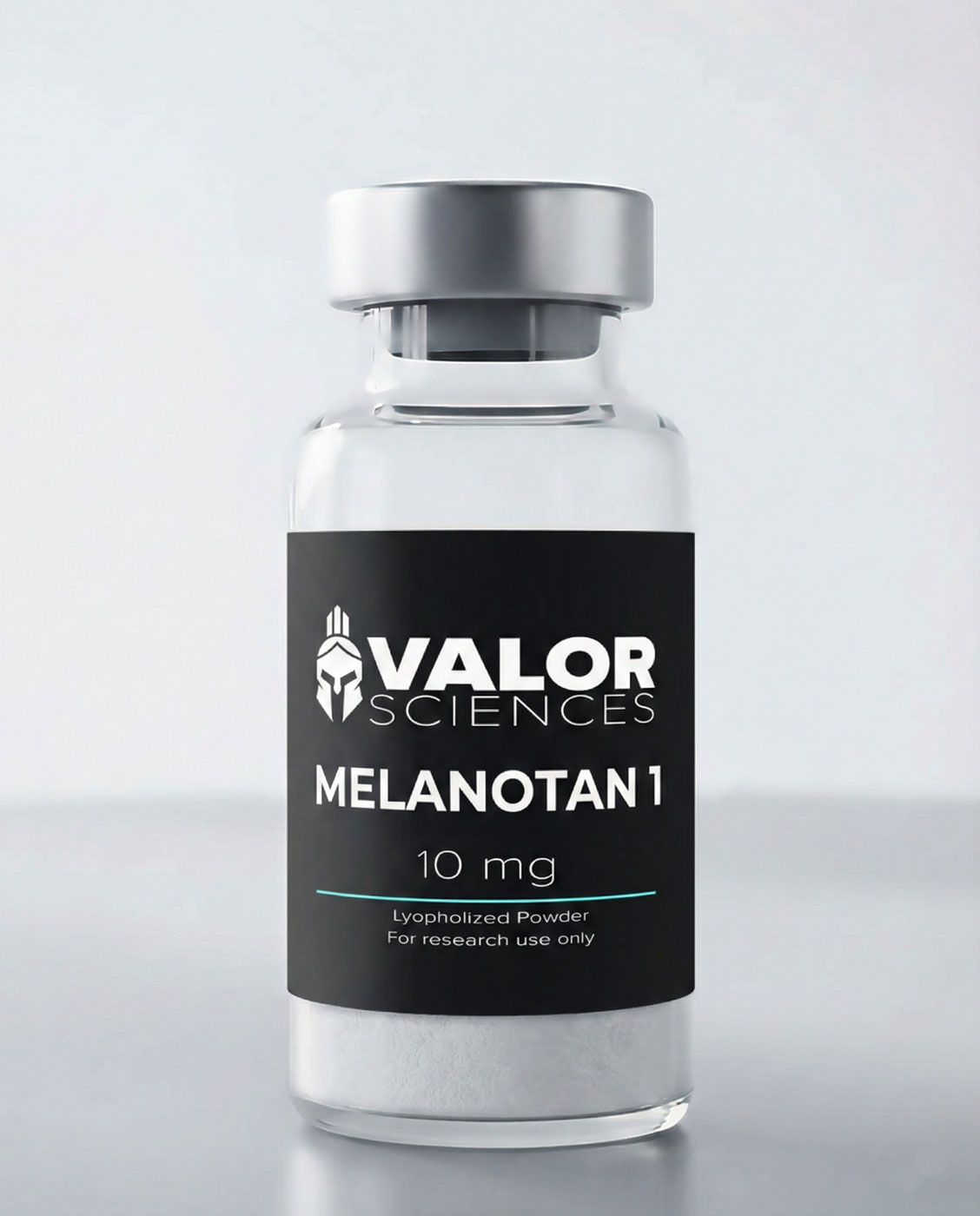
Melanotan 1 (MT-1) Research Peptide (10 mg)
Melanotan 1 (MT-1), , is a synthetic 13–amino acid linear peptide analogue of endogenous α-melanocyte-stimulating hormone (α-MSH). It was developed through structural modification of the native α-MSH sequence to enhance receptor binding affinity and metabolic stability.
MT-1 has been the subject of extensive peer-reviewed research examining melanocortin receptor pharmacology, photoprotection biology, and pigmentation signaling over several decades of in-vitro and in-vivo animal model studies.
Structural Characteristics
MT-1 is a linear tridecapeptide sharing the core sequence of α-MSH, with a key substitution of norleucine (Nle) at position 4 in place of methionine. This modification eliminates the oxidation-prone thioether side chain present in native α-MSH, substantially improving the peptide’s chemical stability without compromising receptor engagement.
The peptide retains the N-terminal acetyl group and C-terminal amide of its parent hormone, features that confer resistance to exopeptidase activity. The His-Phe-Arg-Trp tetrapeptide core (positions 6–9) is preserved intact and has been identified as the pharmacophore responsible for melanocortin receptor activation.
Characterized Signaling Pathways
Published research has identified multiple receptor-mediated signaling interactions:
MC1R / cAMP–PKA–MITF Axis
MT-1 binds with high affinity to the melanocortin 1 receptor (MC1R), activating Gs-coupled adenylyl cyclase and elevating intracellular cAMP. This activates protein kinase A (PKA), which phosphorylates and stabilizes MITF (microphthalmia-associated transcription factor), driving transcriptional upregulation of tyrosinase, TRP-1, and TRP-2—rate-limiting enzymes in the eumelanin biosynthesis pathway (Abdel-Malek et al., Pigment Cell Research, 2001).
Photoprotective DNA Repair Signaling
Research demonstrates that MC1R activation by α-MSH analogues including MT-1 upregulates nucleotide excision repair (NER) capacity in melanocytes, reducing UV-induced cyclobutane pyrimidine dimer (CPD) accumulation independently of melanin pigmentation (Kadekaro et al., Cancer Research, 2005).
Anti-inflammatory NF-κB Modulation
MC1R and MC3R activation by melanocortin peptides has been shown to suppress NF-κB nuclear translocation and downregulate pro-inflammatory cytokine production (TNF-α, IL-6, IL-1β) in macrophage and keratinocyte models, suggesting a role in cutaneous inflammatory signaling research (Luger et al., Journal of Investigative Dermatology, 1997).
Reactive Oxygen Species (ROS) Attenuation
Studies indicate that MT-1–mediated cAMP elevation enhances antioxidant defense mechanisms in melanocytes, reducing UV-induced ROS accumulation and oxidative DNA damage through upregulation of superoxide dismutase and catalase activity (Abdel-Malek et al., Endocrine Reviews, 2010).
Research Applications
MT-1 has been utilized as a molecular probe in controlled experimental systems examining:
- Melanocortin receptor pharmacology (MC1R, MC3R, MC4R, MC5R)
- Melanogenesis and pigmentation signaling pathways
- UV-induced DNA damage and nucleotide excision repair models
- Cutaneous photoprotection biology
- Skin inflammatory signaling and cytokine modulation
- Oxidative stress responses in melanocytes and keratinocytes
- Erythropoietic protoporphyria (EPP) photoprotection models