Description
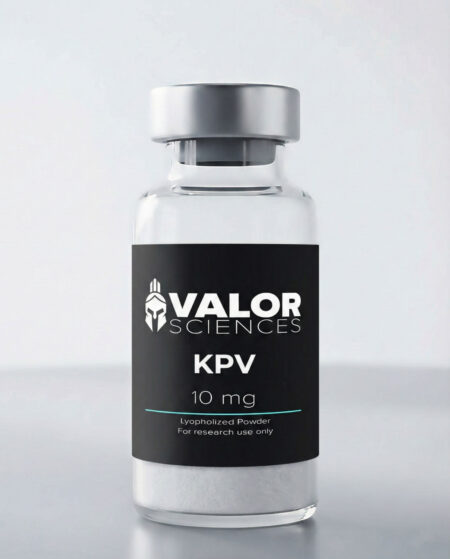
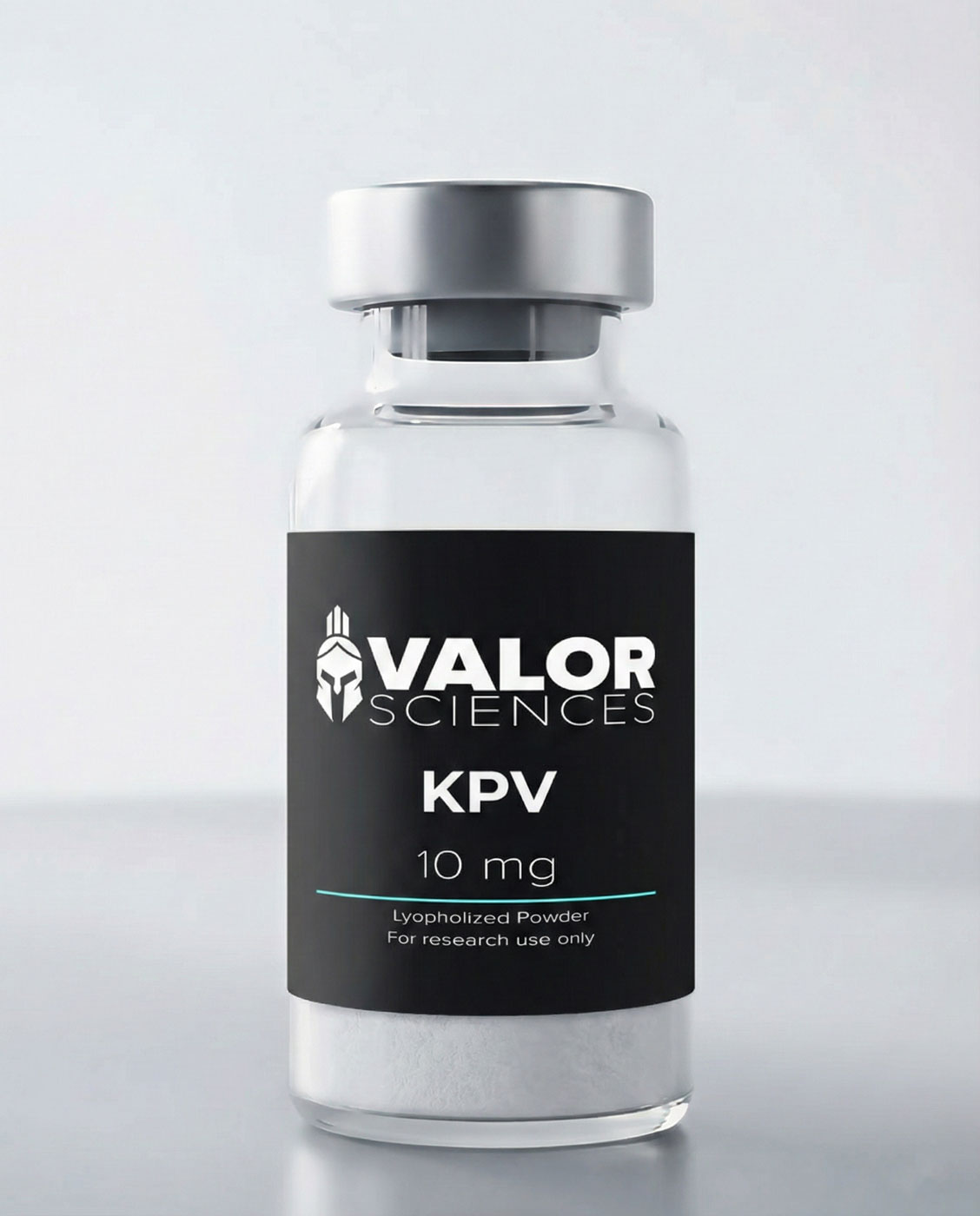
KPV (Lys-Pro-Val) Research Peptide (10 mg)
KPV (Lys-Pro-Val) is a synthetic tripeptide corresponding to the C-terminal amino acid residues 11–13 of α-melanocyte-stimulating hormone (α-MSH). It was identified as a structurally minimal fragment retaining the anti-inflammatory bioactivity of the parent hormone following systematic truncation studies aimed at defining the active pharmacophore of α-MSH.
Despite its exceptionally compact three-residue structure, KPV has been characterized across a substantial body of peer-reviewed research demonstrating potent anti-inflammatory and immunomodulatory activity in cell culture. Its small size confers favorable aqueous solubility, membrane permeability, and resistance to many proteolytic enzymes, properties that have made it a widely used tool peptide in mucosal immunology and gastrointestinal inflammation research.
Structural Characteristics
KPV is a linear tripeptide with the sequence H-Lys-Pro-Val-OH, comprising a free N-terminal amine on lysine, a central proline introducing a rigid cis/trans isomerizable peptide bond, and a free C-terminal carboxylate on valine. Its molecular weight of approximately 328 Da places it among the smallest bioactive peptides used in inflammatory signaling research.
The central proline residue confers partial conformational constraint on the backbone, limiting rotational freedom at the Lys-Pro amide bond and influencing the peptide’s preferred solution geometry. The lysine side chain’s primary amine has been implicated in electrostatic interactions with charged receptor surfaces and intracellular signaling intermediates. The valine C-terminus contributes hydrophobic character that may facilitate intracellular membrane interactions relevant to the peptide’s demonstrated capacity to enter cells and modulate cytosolic signaling cascades directly.
Characterized Signaling Pathways
Published research has identified multiple intracellular signaling interactions:
NF-κB Pathway Inhibition
KPV has been shown to inhibit NF-κB nuclear translocation in macrophage and intestinal epithelial cell models, reducing transcriptional activation of pro-inflammatory cytokine genes including TNF-α, IL-1β, IL-6, and IL-8. This effect has been demonstrated both in cell-free nuclear extract systems and in intact cell lines stimulated with LPS or pro-inflammatory cytokines, indicating a direct intracellular mechanism of action (Donahue et al., Peptides, 2006; Bhaskaran et al., Regulatory Peptides, 2005).
MC1R-Independent Intracellular Anti-inflammatory Activity
Unlike full-length α-MSH, KPV exerts anti-inflammatory effects through mechanisms that are at least partially independent of cell-surface melanocortin receptor engagement. Studies using receptor-blocking antibodies and MC1R-deficient cell lines have demonstrated that KPV retains significant NF-κB inhibitory activity under conditions that abolish receptor-mediated signaling, implicating direct intracellular uptake and cytosolic target engagement as the primary mechanism (Catania et al., Annals of the New York Academy of Sciences, 2004).
Intestinal Epithelial Barrier and Mucosal Immunomodulation
In experimental colitis models, KPV administration has been associated with reduced intestinal permeability, downregulation of mucosal pro-inflammatory cytokine expression, and attenuation of leukocyte infiltration into the lamina propria. These effects have been studied in the context of colonic epithelial cell lines and murine DSS-colitis and TNBS-colitis models, establishing KPV as a tool peptide for investigating mucosal inflammatory signaling (Brzoska et al., Journal of Investigative Dermatology, 2008; Ali et al., Biomacromolecules, 2020).
Macrophage Cytokine Suppression and Inflammasome Modulation
KPV treatment in LPS-stimulated macrophage models has been shown to suppress NLRP3 inflammasome activation and reduce IL-1β and IL-18 secretion, in addition to its effects on NF-κB-driven cytokine transcription. These findings position KPV as a research tool for dissecting the intersection of melanocortin signaling and innate immune activation pathways (Riera Romo, Immunology Letters, 2021).
Research Applications
KPV has been utilized as a molecular probe in controlled experimental systems examining:
- NF-κB signaling pathway inhibition and cytokine suppression models
- Mucosal immunity and gastrointestinal inflammation biology
- Intestinal epithelial barrier integrity research
- Macrophage and innate immune cell activation models
- NLRP3 inflammasome signaling characterization
- α-MSH pharmacophore structure-activity relationship studies
- Intracellular peptide delivery and cytosolic signaling modulation